A stroke can change everything in an instant, but recovery is a powerful, ongoing process.
About This Service
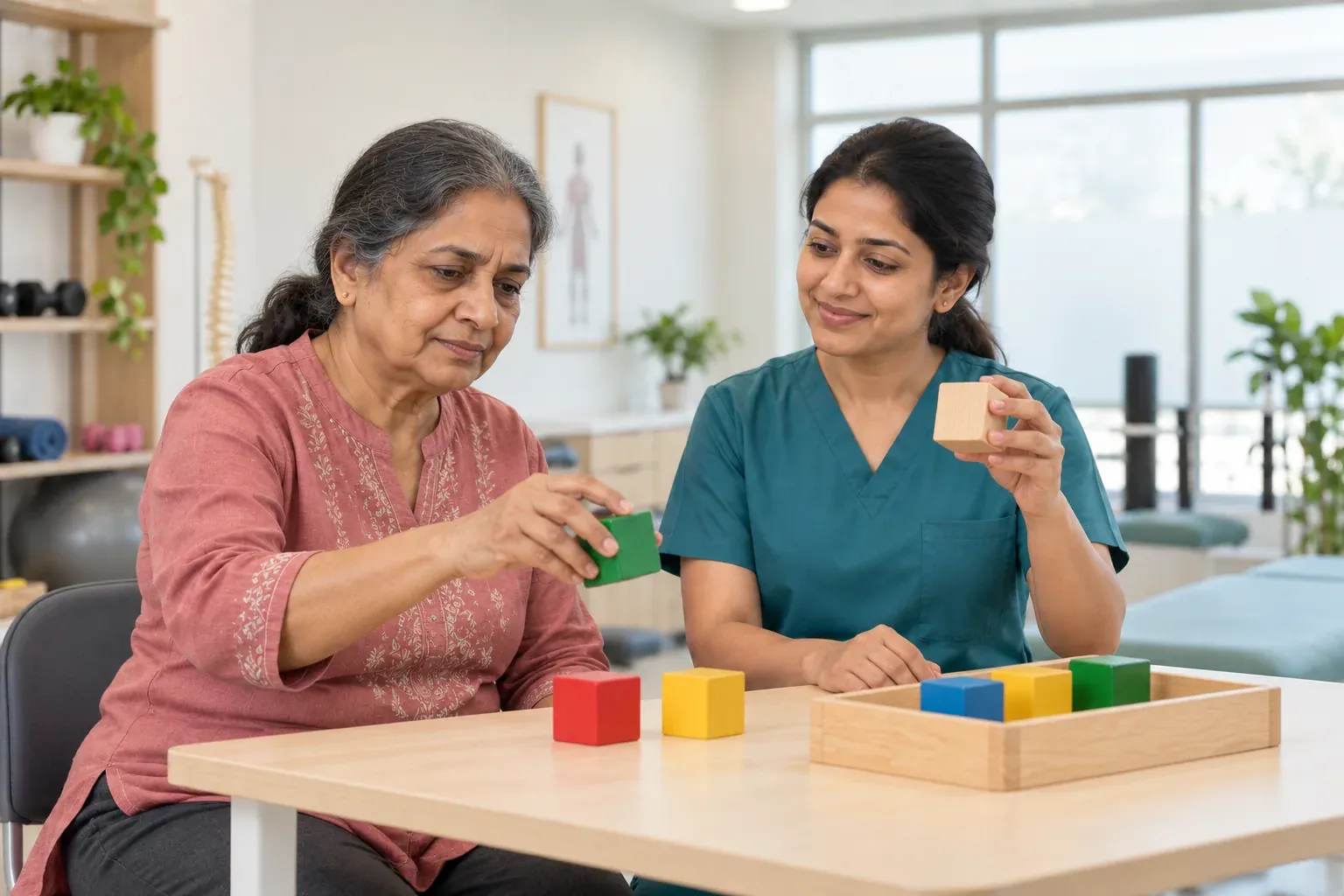
A stroke can change everything in an instant, but recovery is a powerful, ongoing process. At Dr. Yasaswi's Physiotherapy & Rehab Centre, our stroke rehabilitation specialists harness the brain's capacity for neuroplasticity to help survivors reclaim movement, strength, coordination, and independence. From the earliest stages of recovery to long-term maintenance, our multidisciplinary stroke rehabilitation programme is built around each survivor's unique goals - whether that's walking independently, returning to work, or simply caring for themselves at home.
Who Is This For?
- Stroke survivors at any stage of recovery
- Individuals with hemiplegia or hemiparesis (weakness on one side of the body)
- Patients with balance and coordination difficulties following stroke
- Individuals with upper limb dysfunction after stroke
- Patients with gait abnormalities or foot drop
- Stroke survivors experiencing fatigue or deconditioning
- Patients transitioning from inpatient to outpatient rehabilitation
- Caregivers of stroke survivors seeking guidance on home rehabilitation
What to Expect
-
1
Stroke-Specific Assessment
Evaluation of motor function, balance, gait, upper limb function, sensation, cognition, and functional independence.
-
2
Individualized Stroke Rehab Plan
A structured, goal-directed programme based on current evidence in stroke rehabilitation science.
-
3
Neuroplasticity-Based Therapy
Task-specific training, constraint-induced movement therapy, mirror therapy, and neuromuscular electrical stimulation to promote brain reorganization and motor recovery.
-
4
Gait & Balance Retraining
Progressive walking programmes, balance exercises, and fall prevention strategies tailored to your level of recovery.
-
5
Home Exercise & Caregiver Training
We train you and your family to safely continue rehabilitation at home between clinic sessions.
Frequently Asked Questions
It is never too late. While the most rapid recovery occurs in the first 3-6 months, meaningful improvements in function are achievable years after a stroke with consistent rehabilitation. Neuroplasticity is a lifelong capacity.
Intensity matters in stroke rehabilitation. Ideally 3-5 sessions per week in the early recovery phase, reducing to maintenance frequency as goals are achieved. Our team will recommend an appropriate schedule based on your current level of function.
CIMT is an evidence-based technique that involves restraining the stronger arm to force intensive use of the weaker arm, driving neuroplastic changes. It is highly effective for improving upper limb function following stroke.
Yes. Shoulder pain, spasticity-related pain, and other post-stroke pain can be addressed through physiotherapy techniques including positioning, stretching, dry needling, and electrotherapy modalities.
Recovery is not a race - it's a journey. And every step forward matters. Begin your stroke rehabilitation at Dr. Yasaswi's Physiotherapy & Rehab Centre today and reclaim the independence you deserve.
Book an Appointment